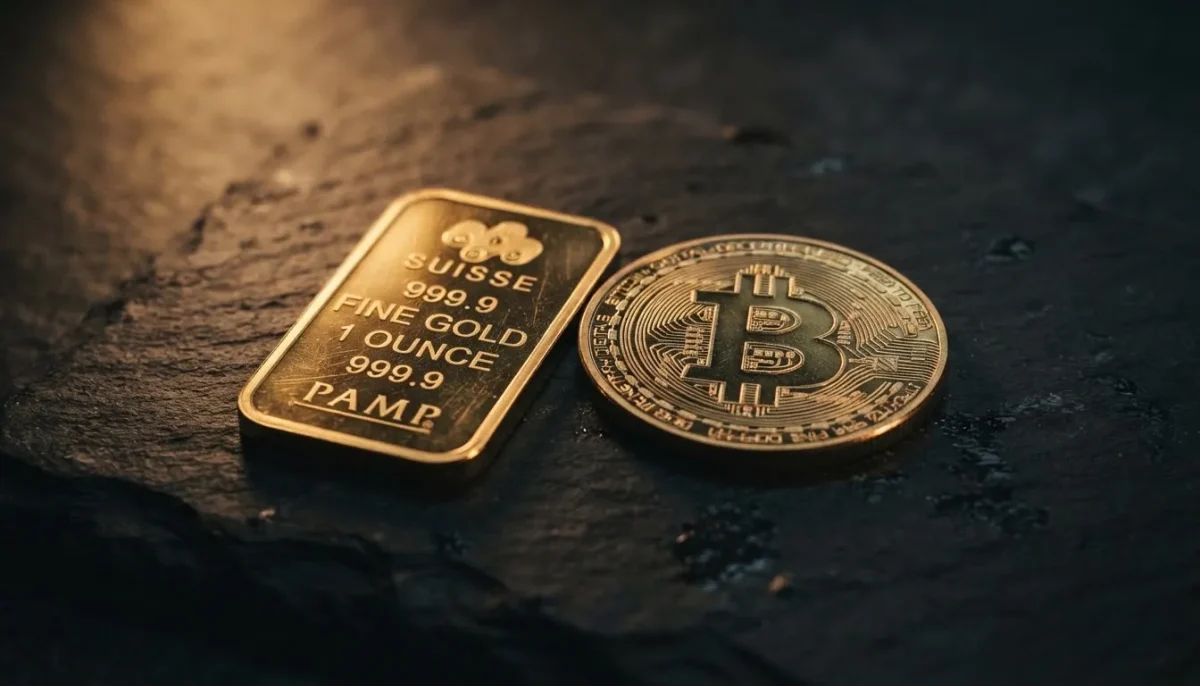
Bitcoin fans call it digital gold. Gold fans call that an insult. Both sides are arguing about the same idea: a store of value, something you can put wealth into today and expect to still be worth something years from now. Comparing the two honestly means looking past the slogans to what each one actually does well.
What makes a store of value
Economists usually list a few qualities: scarcity, durability, portability, divisibility, and — the one that’s hardest to measure — trust built over time. Gold and bitcoin score very differently on that list.
Gold: five thousand years of track record
Gold doesn’t rust, can’t be printed, and has been accepted as wealth across cultures for millennia. Central banks still hold large gold reserves, and in recent years many of them have been net buyers. It tends to attract money during crises and periods when real interest rates fall.
Its weaknesses are practical. Physical gold is heavy and costs money to store and insure. Buying and selling coins or bars involves dealer spreads. And over long stretches gold can go nowhere: after peaking in 1980, it took decades to regain that level in real terms.
Bitcoin: scarcity written in code
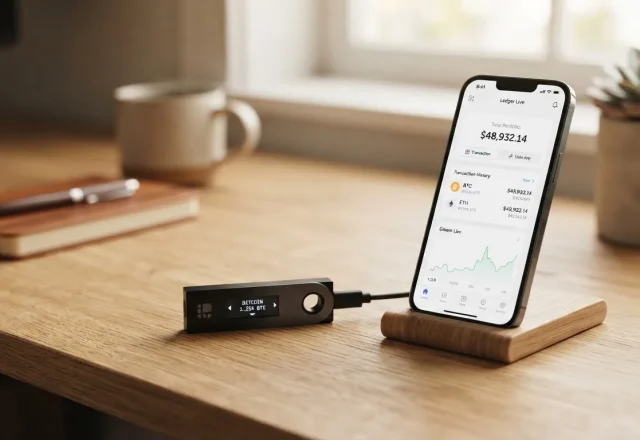
Bitcoin’s supply is capped at 21 million coins, and the rate of new issuance halves roughly every four years. You can send any amount across the world without a bank, split it into tiny fractions and, with your own keys, hold it without any custodian at all — something our wallet guide explains in detail.
The weak spot is the one that matters most for a store of value: stability. Bitcoin has gone through several drawdowns of 70% or more since its launch in 2009. It has a history of about seventeen years, not several thousand. And it relies on an ongoing network of miners, software developers and exchanges, while gold just sits there.
Head to head
| Quality | Gold | Bitcoin |
|---|---|---|
| Supply | Grows slowly through mining | Fixed schedule, capped at 21 million |
| Track record | Thousands of years | Since 2009 |
| Volatility | Moderate | Very high |
| Portability | Poor for large amounts | Excellent |
| Storage cost | Vaults, insurance | Low, but key management is on you |
| Who holds it | Central banks, funds, households | Individuals, funds, some companies |
| Income | None | None |
Do they move together?
Not reliably. In some periods bitcoin has traded more like a high-growth tech stock, falling alongside the Nasdaq-100 when interest rates jump. In others it has moved on its own. Gold has a longer, if imperfect, record of holding up when stocks fall. Anyone hoping bitcoin will behave like gold in the next crisis is making a bet, not relying on evidence.
How investors combine them
You don’t have to pick a side. Some investors hold a small, fixed share of each and rebalance once a year, selling a little of whatever has run up. Others build a bitcoin position slowly through dollar-cost averaging to soften the volatility. A few simple rules apply either way:
- Size positions so that a 50% drop wouldn’t force you to sell.
- Know what you actually own: a gold ETF, a mining stock and a coin in your drawer are three different things; so are bitcoin in your own wallet and a bitcoin CFD.
- Be suspicious of anyone selling “gold-backed” or “bitcoin-backed” accounts with fixed returns.
A store of value earns its name in bad years, not good ones.
Gold is one of several commodities worth understanding — oil is the other giant. Find both in the commodities section.